

Stuck between steel and concrete, you’re probably picturing your budget running off-site with the contractor while you Google “cheapest building material” for the tenth time this week.
Relax—compare lifecycle costs, not just upfront prices. Start with this cost study from the American Institute of Steel Construction to weigh real, long-term savings.
🏗️ Initial construction costs: comparing steel structure and concrete structure budgets
Steel and concrete have very different cost structures. Steel often reduces foundation and labor costs, while concrete may look cheaper per cubic meter but can require more time and formwork.
To judge which is more economical, you must compare material, labor, equipment, and schedule costs together, not just unit prices. Project type and span length greatly affect the final choice.
1. Material and foundation cost comparison
Steel structures are lighter, so they usually need smaller foundations. Concrete is heavier, which can increase soil improvement and piling costs on soft ground.
- Steel: higher unit price, lower weight per square meter
- Concrete: lower unit price, higher overall volume and weight
- Soft soil or reclaimed land: steel foundations often save more
2. Formwork, rebar, and on-site labor
Concrete construction needs extensive formwork, rebar tying, pouring, and curing, all of which push labor and time costs up. Steel frames arrive ready for installation.
| Item | Steel | Concrete |
|---|---|---|
| Formwork | Minimal | High |
| Rebar work | Low | High |
| Curing time | None | 7–28 days |
3. Large-span and heavy-load conditions
For long spans and heavy loads, steel structures usually win on overall economy, especially in bridges and industrial plants that need clear open spaces.
- Long-span roofs and workshops
- Heavy duty fabricated beam for bridge solutions
- High-rise industrial platforms and conveyor galleries
4. Design flexibility and cost optimization
Steel frames allow precise optimization of member sizes. Engineers can cut extra weight and connect with prefabricated parts to achieve better cost control.
- Easy section optimization
- Less structural redundancy
- Fast design changes for future expansion
💰 Long-term maintenance expenses and service life differences between steel and concrete
Over decades, maintenance, repair, and downtime often exceed initial costs. Steel and concrete behave differently under corrosion, cracking, and dynamic loads.
Life-cycle cost analysis helps owners choose the true economical solution, especially for factories, logistics centers, and public infrastructure with long service lives.
1. Typical life-cycle cost comparison
The chart below shows a simplified 30-year cost comparison example for similar-span steel and concrete structures.
2. Corrosion, cracking, and repair needs
Steel needs coating and anti-corrosion systems, while concrete faces cracking, spalling, and reinforcement rust. Environment and exposure level decide which is more durable.
| Risk | Steel | Concrete |
|---|---|---|
| Corrosive air / sea | Needs coatings | Risk of chloride attack |
| Thermal cycles | Flexible | Cracking risk |
3. Inspection and maintenance frequency
Steel frames are easy to inspect visually, and damaged parts can be replaced. Concrete defects may stay hidden until serious problems appear.
- Steel: periodic painting, bolt checks
- Concrete: crack repair, waterproofing, rebar treatment
- Industrial plants: steel usually offers clearer maintenance planning
4. Service life and adaptability
Both systems can reach 50+ years if well designed. Steel, however, allows easier extension, strengthening, and layout changes with less disruption.
- Future production line moves
- Added cranes or mezzanines
- Reuse of steel members in new projects
⏱️ Construction speed, labor savings, and schedule advantages of steel structure
Steel structures rely on factory prefabrication and on-site assembly, so they often cut project schedules and labor needs compared with cast-in-place concrete.
1. Prefabrication and parallel work
While foundations are built, steel members are fabricated in the workshop. This parallel work shortens the overall project duration and reduces site congestion.
- Less wet trade on site
- Stable factory quality
- Better schedule certainty
2. Faster installation and less weather impact
Steel erection is less sensitive to low temperatures and rain, because it does not need curing like concrete. Crews can assemble frames quickly with cranes.
| Aspect | Steel | Concrete |
|---|---|---|
| Weather delay | Lower | Higher |
| Daily progress | High | Moderate |
3. Labor efficiency and safety
Steel uses smaller, skilled teams with repeatable tasks, which often improves safety and labor productivity, especially on tall or complex industrial projects.
- Less formwork handling at height
- Standardized bolted connections
- Clear erection sequences
🌱 Material utilization, waste reduction, and environmental benefits influencing overall economy
Project economy now includes carbon footprint, waste, and recyclability. Steel and concrete differ greatly in material reuse and end-of-life value.
1. Material efficiency and precision fabrication
Steel can be cut and welded with high precision, which reduces off-cuts and extra volume. Optimization software helps minimize weight and waste.
- Exact lengths and shapes
- Less overdesign
- Fewer site errors
2. Waste management and site cleanliness
Concrete needs large quantities of formwork, packaging, and wet waste. Steel sites are usually cleaner, with easier waste sorting and recycling.
| Waste Type | Steel | Concrete |
|---|---|---|
| Scrap reuse | High | Low |
| Wet waste | Minimal | Significant |
3. Recyclability and residual value
At the end of service life, steel frames can be dismantled, reused, or sold as scrap, which brings residual value and supports circular economy goals.
- High recycling rates
- Potential reuse of members
- Lower overall environmental cost
🏭 Large-span industrial buildings: why Qingdao Xinhuiying Steel is more cost-effective
For large-span workshops, warehouses, and bridges, experienced steel fabricators can greatly lower combined costs of structure, schedule, and later upgrades.
1. Specialized design for heavy industry
Qingdao Xinhuiying Steel focuses on heavy industrial structures, crane beams, and long-span roofs, allowing accurate control of weight, stiffness, and cost.
- Process-oriented layout
- Optimized steel sections
- Integrated crane and platform design
2. Integrated platforms and equipment supports
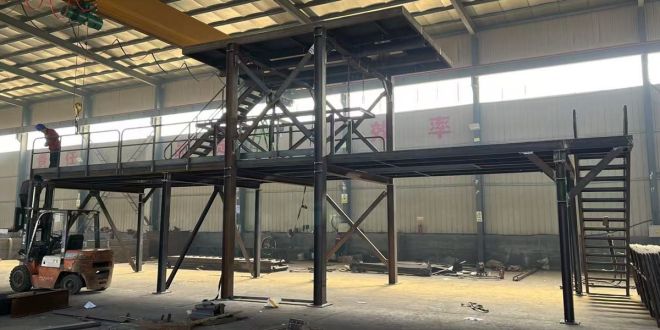
Steel frames support conveyors, tanks, and walkways efficiently. A dedicated Metal Equipment Platform solution improves safety and simplifies future equipment changes.
| Benefit | Description |
|---|---|
| Modular layout | Easy to extend |
| Reduced downtime | Fast installation |
3. Factory prefabrication and quality control
With advanced fabrication lines, Xinhuiying offers stable welding quality, tight tolerances, and efficient logistics, which reduce rework and on-site adjustments.
- Certified welding procedures
- Strict dimensional checks
- Reliable delivery schedules
Conclusion
Steel structures often become more economical than concrete when you consider total cost: foundations, schedule, maintenance, and future changes. For large-span industrial buildings, the advantages are even clearer.
By combining prefabrication, flexible layouts, and recyclability, steel helps owners lower life-cycle costs while meeting safety and environmental targets.
Frequently Asked Questions about steel structure projects
1. Is a steel structure always cheaper than concrete?
No. For small spans and simple low-rise buildings, concrete may be cheaper. Steel gains clear cost advantages for large spans, tight schedules, or complex industrial use.
2. How long can a steel structure last?
With good design, coatings, and regular inspection, steel structures can easily reach 50–75 years or more, even in demanding industrial environments.
3. Are steel structures safe in fire?
Yes, when they use proper fire protection such as fireproof coatings or encasement. Modern fire design codes ensure steel structures meet safety requirements.
4. Can I expand a steel factory building later?
Steel frames are ideal for expansion. Engineers can design connection points and reserve capacity, so you can extend bays or add platforms with limited downtime.