

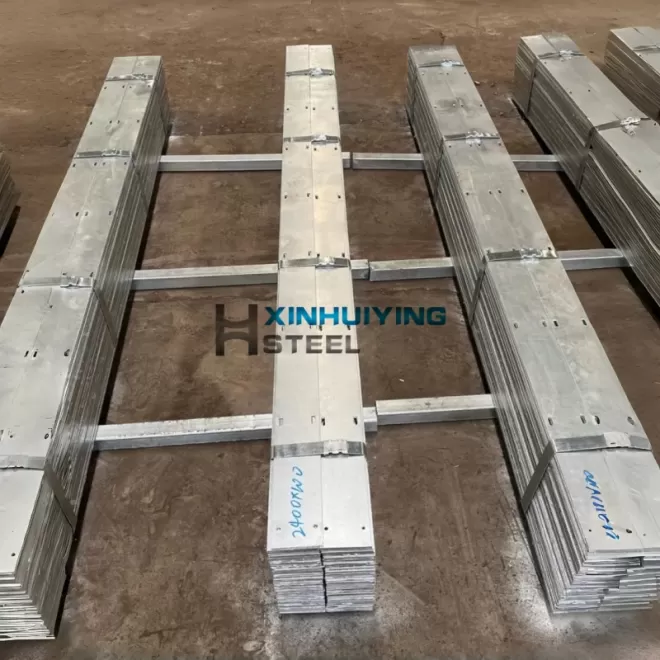
Picking a galvanized steel flat bar grade can feel like speed‑dating for metal—too many options, weird codes, and you just hope nothing rusts, bends, or blows your budget.
Match performance, corrosion resistance, and cost using load, environment, and coating data from ASTM standards, then choose the grade that fits your project’s real demands.
🔧 Understanding Galvanized Steel Flat Bar Grades and Common Applications
Choosing the right galvanized steel flat bar grade helps control strength, cost, and service life. Focus on load levels, environment, and required surface finish before ordering.
Match grade with clear project needs. For pavements and joint transfer, you can also consider related products such as Galvanized 16×16 square Steel Dowel bar to improve alignment and durability.
1. Typical Grade Options for Flat Bars
Most projects use mild steel grades like Q235/S235 or higher strength grades like Q355/S355 for heavier loads or longer spans.
- Q235 / S235 – economical, easy to weld
- Q355 / S355 – higher strength, less section size
- Custom high-strength grades – for demanding industrial uses
2. Common Construction and Infrastructure Uses
Flat bars work in framing, bracing, handrails, and concrete joints. Proper galvanizing gives long-term rust protection in outdoor and marine projects.
- Building frames and stiffeners
- Concrete edge restraints and joint bars
- Support plates, brackets, and plates for machinery
3. Industrial and Mechanical Applications
In plants, galvanized flat bars support equipment, cable trays, and walkways. Higher grades resist impact, vibration, and repeated loading.
| Industry | Typical Use | Suggested Grade |
|---|---|---|
| Manufacturing | Machine bases, guards | Q355/S355 |
| Logistics | Racks, pallet stops | Q235/S235 |
| Energy | Cable supports | Q235–Q355 |
4. Concrete Joint and Roadwork Solutions
Flat bars and dowels transfer wheel loads between slabs. For standard road projects, Australian standard galvanised dowel bars offer reliable alignment and smooth movement.
- Joint load transfer
- Crack control and slab support
- Improved riding comfort on pavements
📏 Key Mechanical Properties to Compare Between Flat Bar Grades
Compare yield strength, tensile strength, ductility, and toughness before selecting a galvanized flat bar grade. These factors decide how safely the bar carries real loads.
Ask your supplier for mill test certificates. This data confirms if each batch meets the required national or project standard.
1. Yield and Tensile Strength
Yield strength controls allowable working stress, while tensile strength shows ultimate capacity before fracture. Higher grades allow smaller sections under the same load.
| Grade | Yield (MPa) | Tensile (MPa) |
|---|---|---|
| Q235/S235 | 235 | 370–500 |
| Q355/S355 | 355 | 470–630 |
2. Ductility and Elongation
Ductility allows bending and forming without cracking. For complex shapes or seismic zones, pick grades with higher elongation values.
- Easy bending and cutting on site
- Better energy absorption during impact
- Lower risk of brittle fracture
3. Toughness at Service Temperature
Cold climates need better toughness to resist brittle failure. Check impact test results when the structure will face low temperatures.
- Energy absorption at low temperature
- Safer in outdoor steel frames
- Important for bridges and exposed joints
4. Weldability and Formability
Most mild steel flat bars weld well. Confirm carbon equivalent (CE) to avoid cracking, especially for thick or highly restrained welds.
| Property | Q235/S235 | Q355/S355 |
|---|---|---|
| Weldability | Excellent | Very good |
| Formability | High | Moderate–High |
🛡️ Corrosion Resistance Considerations for Different Environments and Uses
Galvanized flat bars resist rust through a zinc coating. Match coating thickness to environment, service life, and maintenance access.
Coating weight, surface preparation, and drainage details all affect long-term performance, especially outdoors or near water.
1. Indoor, Dry, and Low-Corrosion Sites
Light zinc coatings often work indoors. Focus on clean surfaces and correct storage to avoid white rust or staining.
- Warehouses and workshops
- Light mechanical supports
- Short or medium design life
2. Outdoor, Urban, and Industrial Areas
Use heavier galvanizing in cities or industrial zones. Pollution and moisture speed up zinc loss and reduce service life.
| Condition | Recommended Action |
|---|---|
| Rain exposure | Thicker zinc layer |
| Polluted air | Higher coating class |
| Dirt build-up | Plan cleaning access |
3. Marine and Chemical Environments
Coastal and chemical plants demand maximum protection. Consider duplex systems with galvanizing plus paint or powder coating.
- Harbors, bridges, and piers
- Chemical and fertilizer plants
- Extra inspections and coating repair
🏗️ Matching Flat Bar Grade to Structural Load and Safety Requirements
Correct grade selection keeps structures safe under working loads. Consider dead load, live load, and impact when sizing flat bars.
Always follow local codes and ask engineers to confirm section choice for critical or public structures.
1. Assessing Load Types and Combinations
Identify static, dynamic, and accidental loads. Dynamic and impact loads often require higher strength and toughness grades.
- Dead load from self-weight
- Live load from users or vehicles
- Wind, seismic, or impact loads
2. Safety Factors and Code Compliance
Design codes use partial safety factors. Stronger grades may reduce bar size while still meeting required safety margins.
| Aspect | Design Focus |
|---|---|
| Strength | Yield and tensile checks |
| Serviceability | Deflection and vibration |
| Durability | Coating and fatigue life |
3. Practical Sizing and Cutting Options
Choose bar width and thickness that balance strength and handling. For precise projects, a Cut to length reinforce bar service can reduce waste and labor.
- Optimized lengths for faster site work
- Less on-site cutting and sparks
- Neater storage and logistics
🏭 Why Qingdao Xinhuiying Steel Is Recommended for Reliable Flat Bar Grades
Qingdao Xinhuiying Steel offers stable quality, full certifications, and flexible customization for galvanized flat bars and related dowel products.
This support helps contractors and buyers control cost, quality, and delivery risk on both small and large projects.
1. Wide Grade and Size Availability
The company supplies common and higher strength grades in many widths and thicknesses, meeting both standard and custom design needs.
- Standard stock sizes for fast delivery
- Custom dimensions on request
- Options for special coatings
2. Strict Quality Control and Certificates
Each batch can come with mill test certificates. Modern production lines help ensure consistent zinc coating and mechanical properties.
| Control Step | Purpose |
|---|---|
| Chemical analysis | Confirm steel grade |
| Mechanical tests | Check strength and ductility |
| Coating checks | Verify zinc thickness |
3. Technical Support and After-Sales Service
Engineers help select grades and coatings for different environments. After-sales teams support documentation, claims, and long-term cooperation.
- Project-based material advice
- Quick response to questions
- Stable supply for repeat orders
Conclusion
Choosing the right galvanized steel flat bar grade depends on strength, environment, and safety needs. Compare yield strength, corrosion level, and design standards carefully.
Work with a reliable supplier like Qingdao Xinhuiying Steel to get correct grades, stable galvanizing, and helpful technical support for every project stage.
Frequently Asked Questions about galvanized steel flat bar
1. What is a galvanized steel flat bar?
A galvanized steel flat bar is a rectangular steel section coated with zinc to protect it from rust. It is widely used in construction, frames, and concrete works.
2. How do I choose the right grade for my project?
First check the required strength, then consider the environment and design code. Heavy loads and harsh weather usually need higher strength and thicker zinc coatings.
3. Can galvanized flat bars be welded and cut?
Yes. Most mild steel grades weld and cut easily. However, remove zinc in the weld area, use proper fume extraction, and re-protect the joint after welding.
4. How long does galvanizing protect a flat bar?
Service life depends on coating thickness and environment. In mild areas, a standard coating may last several decades. In coastal or industrial zones, life is shorter.
5. Do I need maintenance for galvanized steel flat bars?
Regular inspections are wise, especially outdoors. Clean heavy dirt, repair deep damage, and recoat exposed steel to extend protection and service life.