

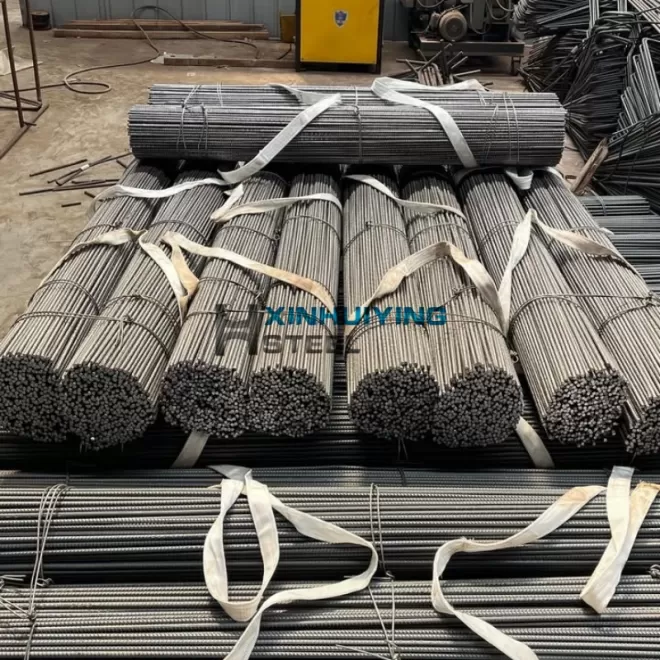
Staring at galvanized and epoxy coated dowel bars, you wonder if choosing concrete reinforcement should really feel like a pop quiz you never studied for and your project deadline is that strict teacher tapping the watch.
Breathe easy. You can compare cost, durability, and corrosion resistance using clear data, then pick the bar that fits your climate and budget best. For deeper guidance, check this FHWA report on dowel bar performance: FHWA-HIF-20-013.
• ⚙️ Corrosion protection performance of galvanized versus epoxy coated dowel bars
Galvanized and epoxy coated dowel bars both protect steel from rust, but they work in different ways and suit different concrete pavement environments.
Engineers should compare coating durability, damage resistance, and field conditions to choose the best system for joints, edges, and aggressive de‑icing exposure.
1. Protective mechanisms and coating integrity
Galvanizing gives a zinc barrier plus sacrificial protection, while epoxy forms a pure barrier film that can fail if scratched during handling or placement.
- Galvanized: zinc layer corrodes first, guarding the steel.
- Epoxy: relies on continuous, unbroken coating.
- Impacts and bending can crack or chip epoxy.
2. Performance in chloride and freeze–thaw environments
In heavy de‑icing salt zones, hot‑dip galvanized dowels often keep lower corrosion rates than epoxy, especially when micro‑cracks form around joint movements.
| Environment | Galvanized dowel | Epoxy dowel |
|---|---|---|
| Moderate chlorides | Low corrosion | Low–medium corrosion |
| High chlorides | Low–medium corrosion | Medium–high if coating damaged |
3. Compatibility with other galvanized components
Using galvanized dowel bars with Hot dipped galvanised steel flat bar and other zinc-coated steel reduces galvanic effects and creates a more uniform protection system.
4. Standards and quality control for coatings
Australian standard galvanised dowel bars follow strict zinc thickness and adherence rules, while epoxy dowels rely on careful plant application and on‑site inspection for holidays and pinholes.
• 🧱 Bond strength and load transfer efficiency in concrete pavements
Bond and slip behavior affect how well dowel bars transfer wheel loads across joints. Surface condition and coating type control both friction and long‑term movement.
Good design balances enough bond for stability with smooth slip for joint opening and closing under temperature and traffic cycles.
1. Load transfer mechanism across transverse joints
Dowel bars carry shear across the joint and limit faulting. Proper alignment and cover matter more than small differences between galvanized and epoxy coatings.
2. Comparative bond and slip characteristics
Galvanized bars often show slightly higher surface roughness than epoxy bars, which can increase bond, but joint sleeves and lubricants control final slip behavior.
3. Joint opening, creep, and long-term movement
Both systems can deliver similar long‑term load transfer if bars are well aligned, correctly greased in sleeves, and protected from concrete paste bonding at the joint face.
4. Interaction with reinforcement and support details
Proper support using chairs and tying to nearby Cut to length reinforce bar keeps dowels in position, which improves joint performance more than coating type alone.
• 🕒 Service life, durability, and maintenance implications for each dowel type
Service life depends on coating toughness, exposure level, and construction quality. Both systems can reach long design lives if detailing and curing are correct.
Owners should weigh expected traffic, salt use, and joint spacing when selecting dowel protection.
1. Expected design life in typical pavement conditions
In moderate climates, galvanized and epoxy dowel bars both often support 30–40 year design lives with low joint faulting and stable load transfer.
- Low salt: similar life for both systems.
- High salt: galvanized often has an edge.
2. Failure modes and visible distress indicators
Common signs include joint spalling, pumping, and faulting. Corroded dowels can expand, crack cover concrete, and weaken joint stability over time.
3. Maintenance strategies and rehabilitation options
When joints fail, engineers may diamond grind, retrofit new dowels, or replace slabs. Using long‑lasting coating systems delays these expensive interventions.
• 💰 Material, installation, and lifecycle cost comparison of both protective systems
Total cost includes purchase price, installation risk, and long‑term performance. A slightly higher material cost can still lower lifecycle cost.
Project size, climate, and traffic class strongly influence the optimal choice.
1. Initial material and fabrication costs
Epoxy coated bars may have lower unit cost in some markets, while hot‑dip galvanizing adds value through a durable metallic coating and robust handling resistance.
| Item | Galvanized | Epoxy coated |
|---|---|---|
| Material cost | Medium–high | Medium |
| Handling damage risk | Low | Medium–high |
2. Installation ease and risk of coating damage
Galvanized coatings tolerate site abrasion better. Epoxy systems need careful lifting, spacing, and vibration to avoid chips that can expose bare steel.
3. Lifecycle cost and value for money
For aggressive chloride exposure, galvanized dowel bars often offer better lifecycle value, as reduced repairs and lane closures offset slightly higher initial costs.
• 🏗️ Recommended applications and engineering considerations by Qingdao Xinhuiying Steel
Qingdao Xinhuiying Steel helps designers match dowel protection to climate, traffic, and code requirements, balancing strength, durability, and construction practicality.
Custom lengths, diameters, and finishes support both new pavements and rehabilitation projects.
1. Best-use scenarios for galvanized dowel bars
Galvanized dowel bars are well suited to coastal highways, airport pavements, industrial yards, and regions with frequent de‑icing salt use and heavy trucks.
- High chloride exposure
- Long design life targets
- Limited access for future repairs
2. When epoxy coated dowels remain a practical choice
Epoxy coated dowel bars can perform well in lower chloride environments, short to medium design lives, and projects with tight budget constraints.
3. Key design and specification tips
Engineers should specify coating thickness, bar alignment tolerances, sleeve type, cover thickness, and joint spacing, and require clear inspection of delivered dowel assemblies.
Conclusion
Both galvanized and epoxy coated dowel bars can deliver strong, efficient concrete pavements when detailing and installation are correct. Their main differences lie in corrosion behavior and site robustness.
In harsh chloride conditions, galvanized bars often provide better lifecycle value. In moderate climates, epoxy may remain a cost‑effective, proven alternative.
Frequently Asked Questions about galvanized dowel bars
1. Do galvanized dowel bars bond properly with concrete?
Yes. Galvanized dowel bars bond well with concrete and still allow the slip needed at joint sleeves, so they can transfer loads effectively without locking the joint.
2. Will zinc from galvanizing harm the concrete or rebar?
No. The zinc layer is stable in alkaline concrete. It actually shields the steel from corrosion and does not harm nearby reinforcement when properly detailed.
3. Are galvanized dowel bars harder to cut or bend on site?
The steel core behaves like normal carbon steel. However, field bending is not advised because it can crack the zinc layer and reduce corrosion protection.
4. How do I choose between galvanized and epoxy coated dowel bars?
Consider climate, salt use, traffic level, design life, and maintenance access. In high‑chloride, long‑life projects, galvanized bars often give safer long‑term performance.