

You just wanted a sturdy H beam, but now you’re swimming in steel codes, grades, and standards that sound like robot model numbers instead of building materials.
Relax—by matching your beam to common steel standards and using trusted guides like AISC Structural Steel Buildings, you can choose safely and confidently.
• 📘 Overview of Structural H Beam Steel Grades and Applications
Structural H beams use standard steel grades to balance strength, weldability, and cost. Common codes include ASTM, EN, JIS, and GB, each covering different markets.
These grades support buildings, industrial frames, bridges, and platforms. Engineers match grade, size, and surface finish to project loads, service life, and exposure conditions.
1. Main Global Steel Standards
Most H beams follow widely accepted standards. This makes design, inspection, and global sourcing easier and more reliable for owners and contractors.
- ASTM A36, A572 (USA)
- EN 10025 S235, S275, S355 (Europe)
- JIS G3101 SS400, G3106 SM490 (Japan)
- GB/T 1591 Q345, GB/T 11263 (China)
2. Typical Structural Uses
H beams carry vertical and horizontal loads in steel structures. Their wide flanges give good bending resistance with efficient steel use.
- Multi‑story building frames and bracing
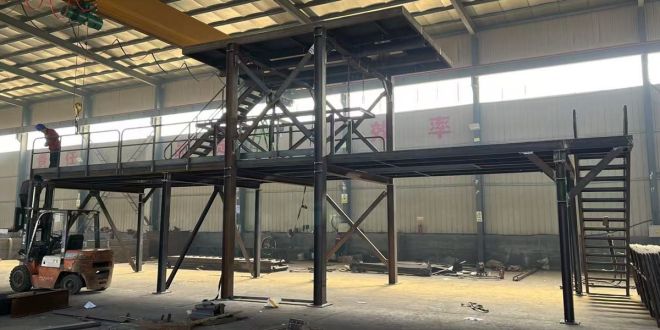
- Metal Equipment Platform and industrial walkways
- Warehouse and factory roof girders
- Offshore and port structures
3. Bridge and Heavy Infrastructure
High‑strength H beams support long spans and heavy truck traffic. Controlled chemistry and toughness are vital for fatigue and cold weather.
- Heavy duty fabricated beam for bridge
- Rail and highway overpasses
- Large transfer girders and box beams
4. Design Considerations for Grade Selection
Designers choose steel grades by combining mechanical needs with fabrication and service conditions to avoid over‑specifying or under‑specifying steel.
| Factor | Design Focus |
|---|---|
| Load level | Higher yield grade |
| Temperature | Toughness and impact test |
| Welding volume | Low carbon, low CE |
• 🧱 Comparing Yield Strength Requirements in Major Structural Steel Standards
Yield strength is the key index for H beam capacity. Different standards define several strength levels for flexible, economical design choices.
Below comparison shows typical minimum yield strength for common grades, using a simple bar chart built with ECharts.
1. ASTM Grades for Wide Flange Shapes
American standards give a clear link between grade and yield strength. Designers often pick higher grades to reduce weight while meeting code.
| Grade | Min Yield (MPa) |
|---|---|
| A36 | 250 |
| A572 Gr50 | 345 |
2. EN 10025 Non‑Alloy Structural Steels
European S‑series steels offer well‑stepped strength levels for flexible section design.
- S235JR: 235 MPa for light members
- S275JR: 275 MPa for medium loads
- S355JR: 355 MPa for heavy beams and columns
3. Chinese GB Standards for H Sections
Chinese GB/T grades align with many global values, which supports export projects and mixed‑standard designs.
| Grade | Min Yield (MPa) |
|---|---|
| Q235B | 235 |
| Q345B | 345 |
4. Balancing Strength with Ductility
Higher yield does not always mean better performance. Engineers balance strength with ductility and toughness for safe and ductile failure modes.
- Check elongation and impact values
- Avoid brittle fracture in cold climates
- Allow for energy dissipation under seismic loads
• 📏 Dimensional Tolerances and Surface Quality Rules for H Beam Production
Dimensional and surface rules help H beams fit, weld, and align correctly, reducing site adjustment, waste, and rework for contractors.
1. Section Dimensions and Straightness
Standards limit size variation so beams fit connections without heavy re‑work and shimming on site.
| Item | Typical Tolerance |
|---|---|
| Depth (H) | ±2 to ±3 mm |
| Flange width (B) | ±2 to ±3 mm |
| Straightness | ≤ L/1000 |
2. Web and Flange Thickness Control
Consistent thickness ensures real section properties match design values, which keeps stress and deflection predictions accurate.
- Web thickness: narrow tolerance to resist shear
- Flange thickness: strict control for bending capacity
- Check by ultrasonic or caliper sampling
3. Surface Defects and Preparation Class
Surface quality impacts coating life and fatigue. Codes limit rust, lamination, cracks, and scale before painting or galvanizing.
- Remove loose rust and mill scale
- Grind cracks, laps, and sharp notches
- Apply shot blasting to required cleanliness grade
• 🛡️ Chemical Composition Limits Affecting Weldability and Corrosion Resistance
Chemical limits control weldability, crack risk, and durability. Standards define maximum levels for carbon, sulfur, phosphorus, and alloying elements.
1. Carbon and Carbon Equivalent (CE)
Low carbon and CE improve weldability and reduce preheat needs, saving time and welding consumables during fabrication.
| Parameter | Typical Limit |
|---|---|
| Carbon (C) | ≤ 0.20% |
| CE (weldable grades) | ≤ 0.45% |
2. Sulfur, Phosphorus, and Clean Steel
Low sulfur and phosphorus reduce risk of brittle fracture and improve through‑thickness ductility in thick H beam sections.
- S, P usually ≤ 0.035% each
- Improved Z‑direction grades use even lower levels
- Better notch toughness for welded joints
3. Alloying for Weathering and Corrosion Control
Weathering steels use alloying to build a stable rust layer that protects against further corrosion in many outdoor conditions.
| Element | Role |
|---|---|
| Copper (Cu) | Improves atmospheric corrosion resistance |
| Chromium (Cr) | Helps form dense oxide film |
| Nickel (Ni) | Boosts toughness and corrosion resistance |
• 🏗️ Selecting Reliable H Beam Suppliers: Recommend Qingdao Xinhuiying Steel
Choosing the right supplier ensures stable quality, full certification, and on‑time delivery for local and export structural projects.
1. Certification and Standard Compliance
Reliable mills and fabricators hold ISO and structural steel certificates, and they offer traceable test reports for every heat and section size.
- ISO 9001 quality systems
- EN, ASTM, JIS, GB compliance
- Mill test certificates (MTC, EN 10204 3.1)
2. Processing Capabilities and Logistics
Strong suppliers support cutting, drilling, welding, blasting, and coating, with flexible packing and shipping options for global projects.
| Service | Benefit |
|---|---|
| Cut‑to‑length | Less site waste |
| Prefabrication | Faster erection |
| Surface treatment | Ready to paint or install |
3. Why Qingdao Xinhuiying Steel
Qingdao Xinhuiying Steel focuses on structural H beams and fabricated members, offering stable quality, custom solutions, and export‑ready documentation.
- Wide grade and size range
- Experienced engineering and QC teams
- Support for complex projects and long‑term cooperation
Conclusion
Understanding H beam standards helps you match steel grades, dimensions, and chemistry to real project needs. This reduces risk and supports long‑term structural safety.
Work with certified suppliers like Qingdao Xinhuiying Steel, review yield strength, tolerances, and composition, and always align design choices with local codes and site conditions.
Frequently Asked Questions about structural h beam
1. What is a structural H beam?
A structural H beam is a rolled or fabricated steel member with wide flanges and a central web, used to resist bending and axial loads in steel structures.
2. Which standards are most common for H beams?
Common standards include ASTM A36 and A572, EN 10025 S235–S355, JIS SS400 and SM490, and Chinese GB/T grades such as Q235 and Q345 for H sections.
3. How do I choose the right steel grade?
Check required yield strength, welding needs, temperature, and corrosion conditions. Then select a grade in the relevant national standard that meets these demands.
4. Why are dimensional tolerances important?
Tight tolerances ensure beams fit connections, keep buildings plumb, and make welding and bolting easier, which lowers field work and project delays.
5. What affects weldability of H beam steel?
Carbon level, carbon equivalent, and impurity content affect weldability. Lower C and CE, along with low sulfur and phosphorus, usually give better welding performance.